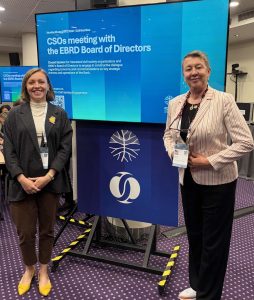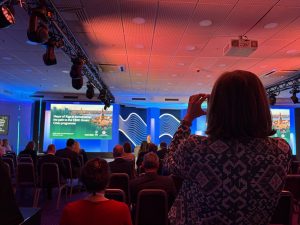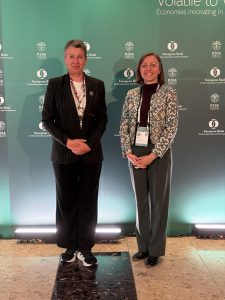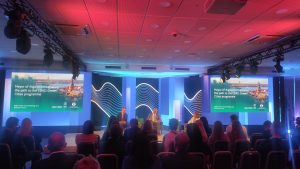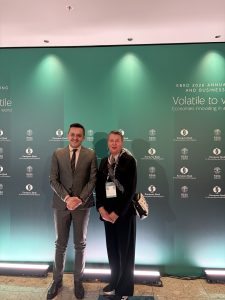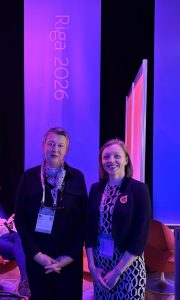
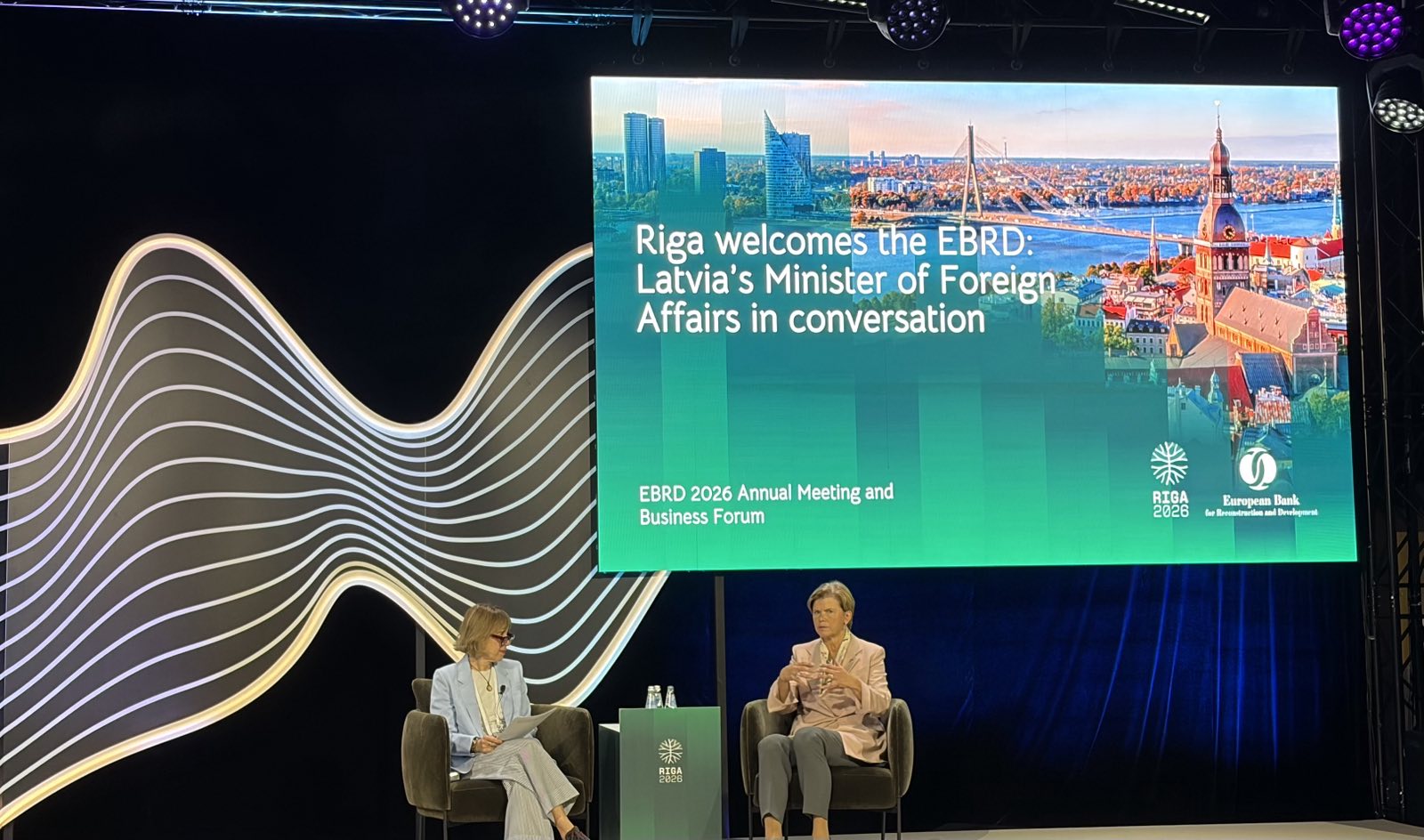
How can economies become more resilient, inclusive, and sustainable in an increasingly uncertain world? This was the central question explored at the 35th Annual Meeting and Business Forum of the European Bank for Reconstruction and Development (EBRD), held in Riga, Latvia, from 5–7 June 2026.
Representing the Gender Budget Watchdog Network (GBWN) were Ivana Petriskova, GBWN Program Coordinator, and Slavica Strikovic from Women Action, who joined policymakers, business leaders, investors, development partners, and civil society representatives from across Europe and beyond.
Under the theme “Volatile to Versatile – Economies Innovating in a Changing World,” the forum provided a platform for discussing some of the most pressing challenges and opportunities facing societies today—from green finance and sustainable cities to artificial intelligence and the role of civil society in shaping resilient communities.
Building Inclusive Economies Through Financial Literacy
One of the recurring messages throughout the forum was the need to bring citizens closer to economic opportunities. Discussions on regional capital markets highlighted that many people still lack the knowledge and confidence needed to participate in investment opportunities and long-term financial planning. Speakers stressed that improving financial literacy is essential for strengthening economic resilience and ensuring that the benefits of economic growth are shared more broadly. These discussions resonated strongly with GBWN’s commitment to promoting inclusive policies and equitable access to economic opportunities.
Green Cities Need Green Investments
The transition to more sustainable and climate-resilient cities was another key topic throughout the event. During discussions on the EBRD Green Cities Programme, participants explored how municipalities can move beyond reliance on donor funding and mobilize investments through partnerships with private financial institutions and investors. Examples from across the region demonstrated how investments in sustainable transport, cleaner infrastructure, and greener urban environments can improve quality of life while also making cities more attractive for businesses and future investments.
For GBWN, these discussions reinforced the importance of ensuring that climate and infrastructure investments respond to the diverse needs of women and men and contribute to more inclusive urban development.
Civil Society as a Partner for Change
Among the most relevant sessions for GBWN was the discussion on the evolving role of civil society organizations. Rather than being viewed solely as watchdogs, civil society actors were increasingly recognized as partners, innovators, and contributors to policy development and investment planning. Participants emphasized that meaningful engagement of civil society should begin at the earliest stages of decision-making processes, enabling communities to contribute knowledge, expertise, and local perspectives before investments are designed and implemented.
This message aligns closely with GBWN’s vision of strengthening accountability through constructive dialogue and collaboration between institutions and civil society organizations.
Artificial Intelligence and the Human Factor
As artificial intelligence continues to transform economies and societies, the forum also addressed the opportunities and risks associated with emerging technologies. Experts highlighted the importance of maintaining human oversight, ethical standards, and robust governance frameworks when using AI systems. While AI can support data analysis and decision-making processes, speakers agreed that human judgement, critical thinking, and accountability remain irreplaceable. For organizations working with public policies and evidence-based advocacy, these discussions offered valuable insights into how technology can be used responsibly while safeguarding democratic values and fundamental rights.
Strengthening Partnerships for Sustainable Development
Beyond the formal sessions, the Annual Meeting offered valuable opportunities for networking and exchange among stakeholders from different regions and sectors. The event demonstrated that addressing today’s complex challenges requires collaboration between governments, businesses, financial institutions, and civil society organizations. One of the most important meetings was the one with the Ministry of Finance of Montenegro.
GBWN’s participation provided an important opportunity to learn from emerging practices, share experiences from the Western Balkans, and explore new partnerships that can contribute to more transparent, accountable, and inclusive development processes. As discussions in Riga made clear, resilience is not built by institutions alone. It is created through cooperation, innovation, and the meaningful inclusion of diverse voices in shaping the future.
We look forward to bringing the lessons and connections from Riga into its ongoing work to advance gender-responsive budgeting, strengthen civic participation, and promote sustainable development across the region.