
Most countries have strong language on gender equality in laws, strategies, and policy documents. But what really tells you what will happen next year is the budget. If there’s no money supporting the commitment, it will inevitably remain simply a statement. That’s why gender-responsive budgeting matters. It’s not a mantra or a side-topic. It’s a way of asking basic, practical questions: Who benefits from public spending? Who is left out? What gets funded and what keeps getting postponed? Are budgets delivering for all women and girls? And these questions are relevant across the globe and asked by gender budget advocates.
What took place in Nairobi?
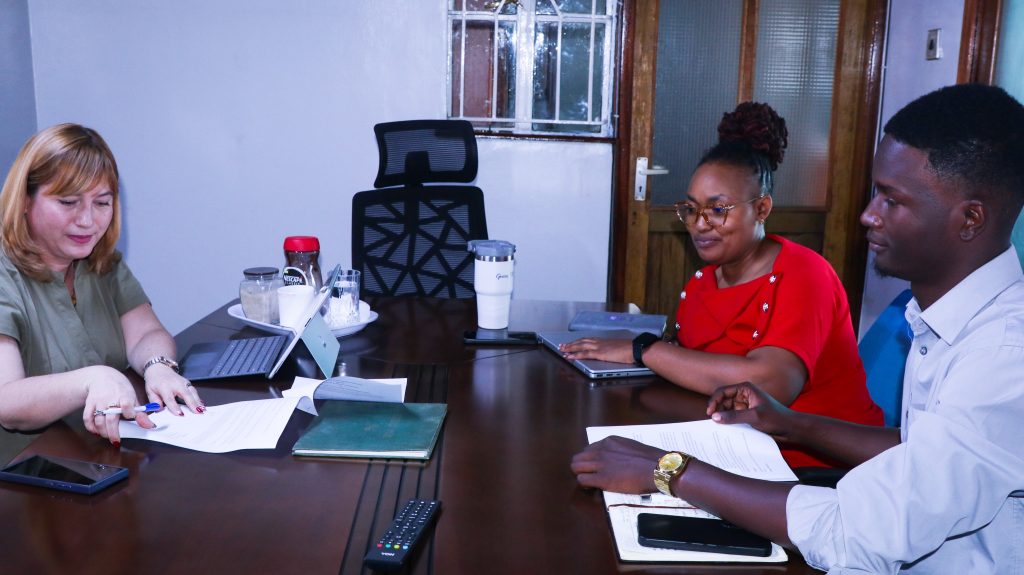
On 19 January 2025, a Memorandum of Cooperation between CCGD Kenya and GBWN was signed. This is an important step as it connects experience and energy across contexts, Kenya’s strong, locally rooted practice and GBWN’s wider network approach. It’s also a shared position: policy reform without funding is just a promise on paper. CCGD has been around for decades, and the Kenyan Budget Network has built something valuable: a broad base of civil society, experts, and researchers who can look at budgets and talk about them in plain language. That kind of work changes the conversation. Budgets stop being “for technocrats and bureaucrats only” and start being something communities can question, especially at community level, where services are felt directly.
What does GBWN bring, and why does that have global weight?
GBWN’s impact is simple: it helps turn GRB from an isolated exercise into a shared practice across places. GRB approaches are replicable across regions, and the GBWN strategy of regionally working on research, evidence-based analysis and advocacy, the GBWN methods can be exported in East Africa. Our methodologies for resilience and climate change financing monitoring using GRB tools are very relevant and needed to be transferred in Africa where climate change is most visible. Together with CSOs from EAC, we can create a bigger global impact and facilitate SDG implementation beyond the Western Balkans. When networks like ours, from different countries, compare notes, they raise the standard. And that helps everyone push for fairer spending and real accountability.
Why does this matter now?
Public budgets are under pressure everywhere: rising costs, aging populations, growing care needs, climate shocks, and tightening fiscal space. In moments like this, the risk is that equality becomes “nice to have” and gets quietly dropped. GRB pushes back against that. It says: show the choices and the equality results. It also strengthens trust. People don’t lose faith because policy documents are missing; they lose faith when policies do not deliver because they have bad design or are poorly funded. This Memorandum of Cooperation provides framework for working together by utilizing knowledge exchange, technical cooperation, and having joint initiatives for improved policy designs, policy reforms and budgets that deliver for women and men.