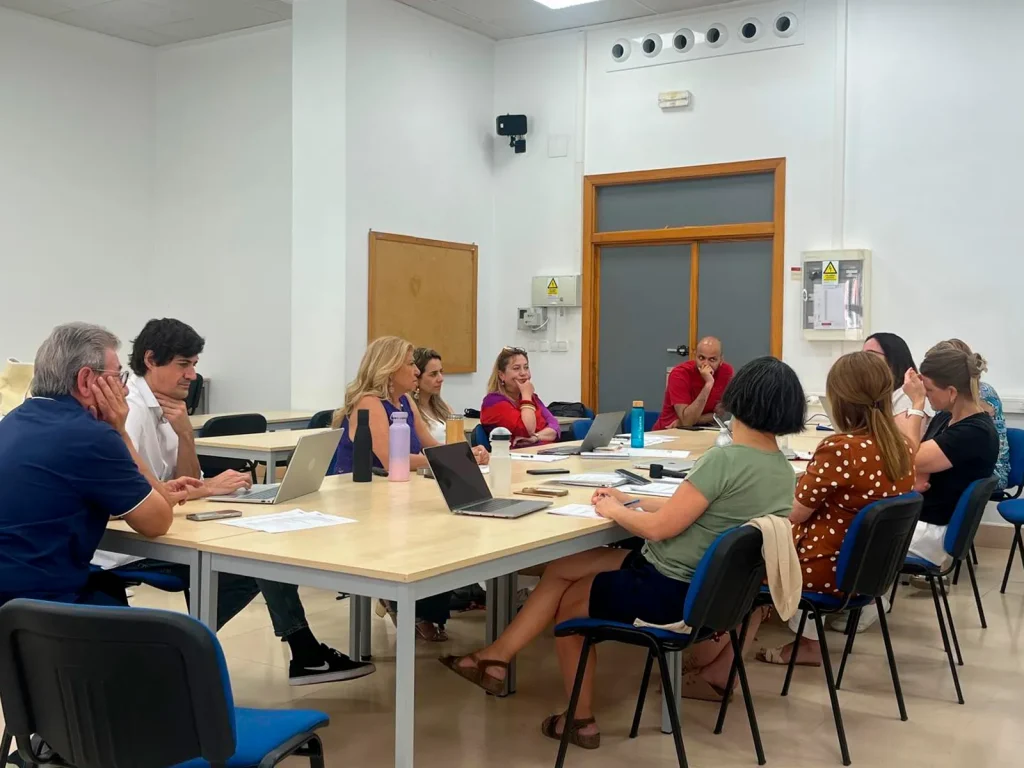
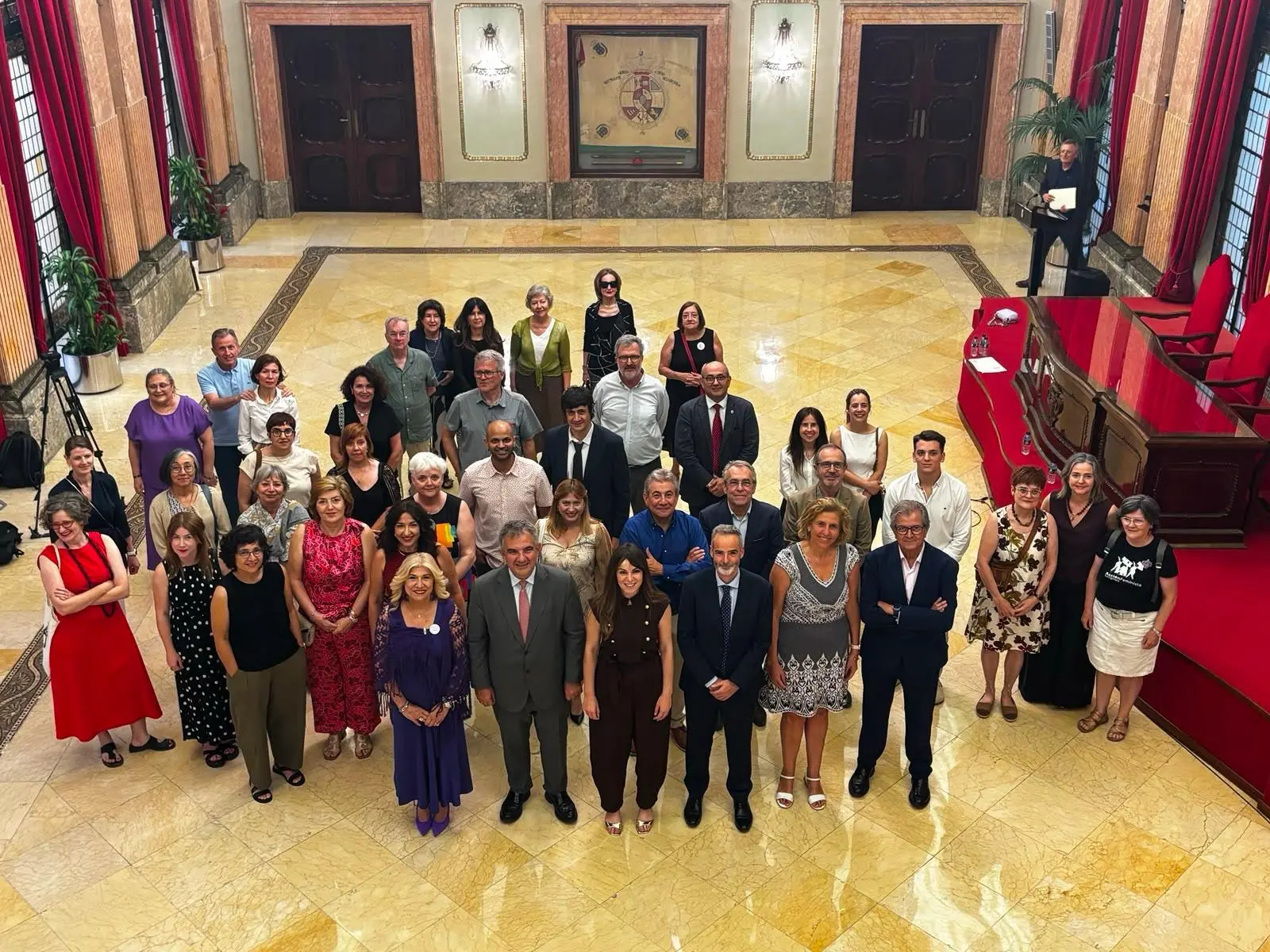
The central premise of the symposium was that infrastructure should not be understood only as roads, energy systems, transport corridors or large-scale economic assets. Rather, it should also include the everyday systems that enable people to live with dignity: healthcare, education, care services, public transport, lighting, green spaces, digital infrastructure, cultural spaces and community facilities. These infrastructures shape access to employment, education, health, safety, care, leisure, social relationships and participation. They therefore have direct consequences for subjective well-being, social cohesion and gender equality.
A key contribution of the symposium was the presentation and discussion of new metrics that can support more inclusive public decision-making. The WIGI approach was presented as an innovative tool for measuring how infrastructure affects well-being through the strengthening of capabilities. The discussions challenged the assumption that infrastructure is gender-neutral, showing instead that women and men often use, need and benefit from infrastructure differently because of unequal care responsibilities, mobility patterns, safety concerns, income inequalities and access to time.
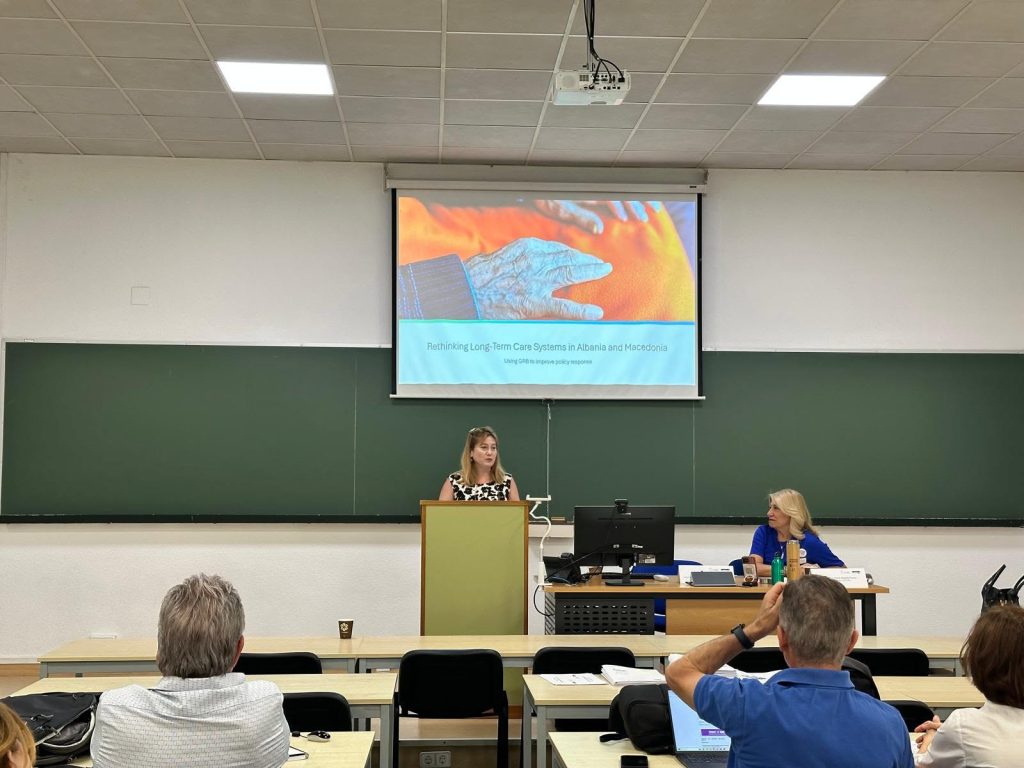
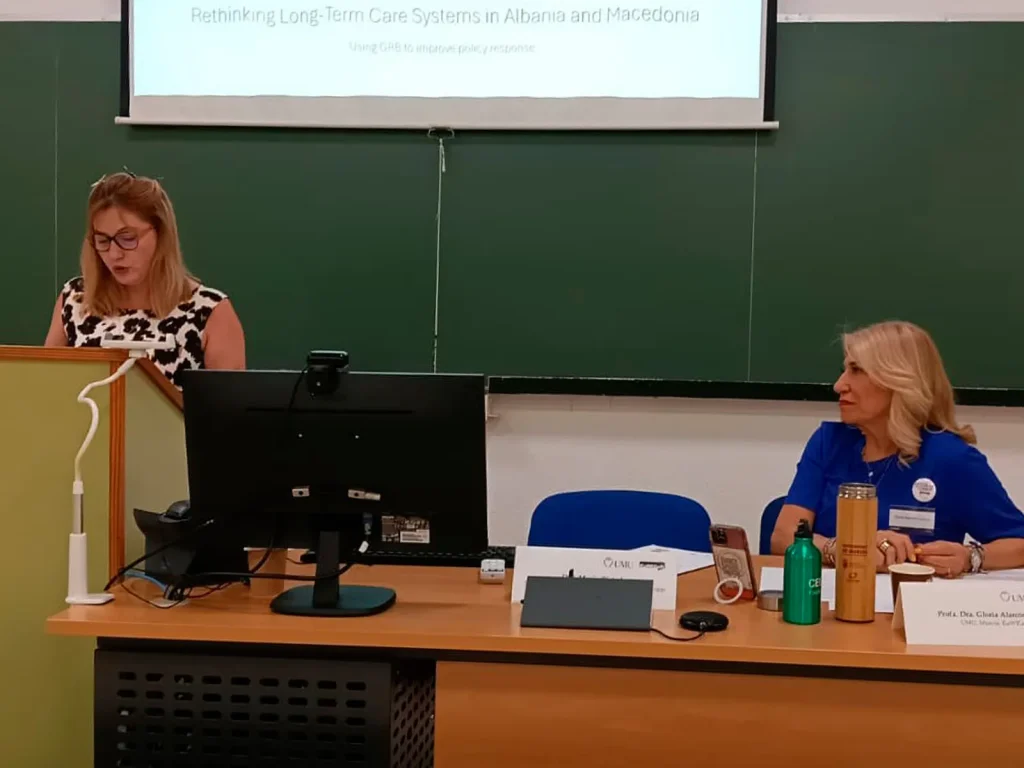
Marija Risteska, GBWN regional directress resented a paper on Rethinking long term care in Albania and Macedonia with a simple main message: care is not only a social issue, it is economic and infrastructure issue. Just as we invest in roads, energy or water systems, we also need to invest in care systems. Long-term care services can improve the dignity and quality of life of older people, support women’s participation in the labour market, create jobs, and make public finances more sustainable.