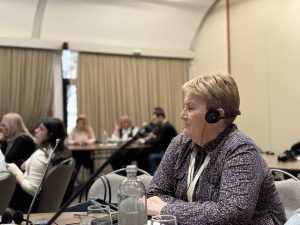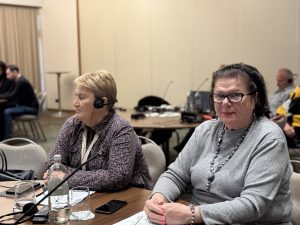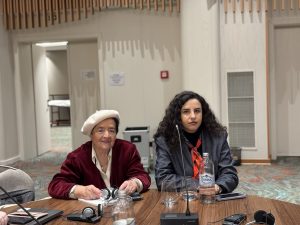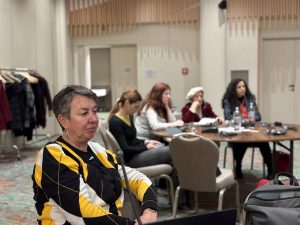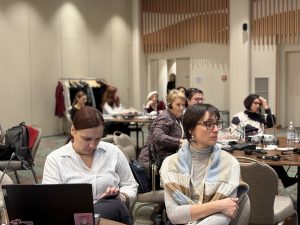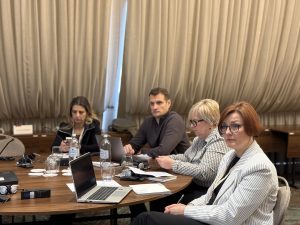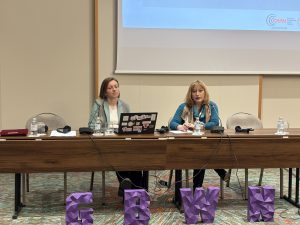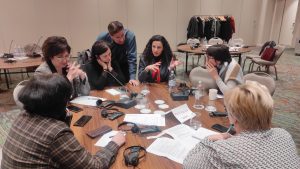
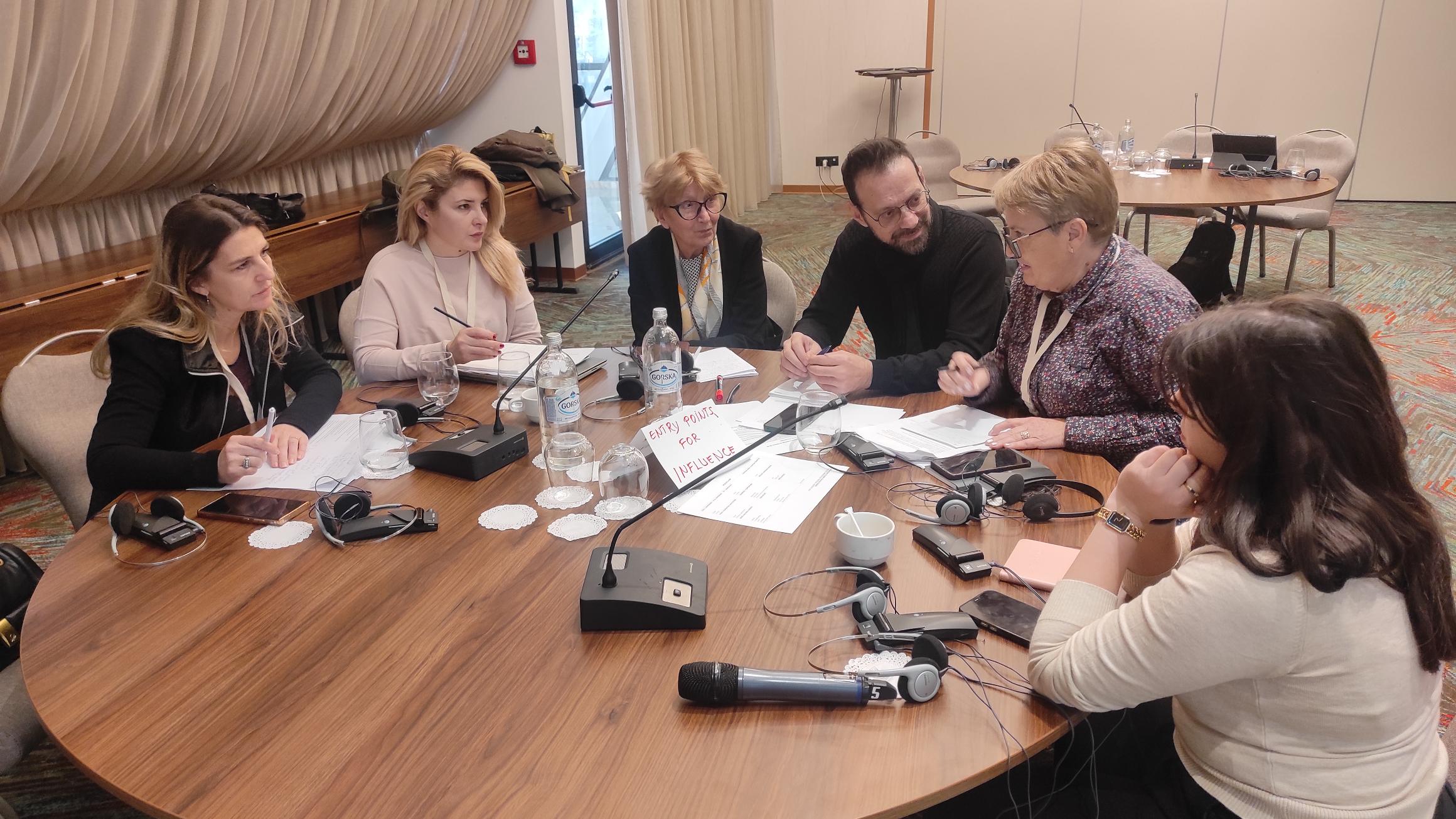
12th December 2025, Skopje: GBWN Annual Meeting provided a dedicated space for members to reflect more deeply on the Network’s future direction and strategic priorities. Building on our achievements, discussions focused on strengthening global, regional, and local advocacy—particularly on gender-responsive climate finance, domestic resource mobilization, transport, green jobs, circular economy, agriculture subsidies, and women’s entrepreneurship and access to finance. With the guidance of our mentors in the open group discussions on advocacy priorities, the members highlighted the importance of reinforcing GBWN’s watchdog role with institutions, advancing inclusion (including disability rights), and expanding work on financial literacy, social enterprises, and crisis management from a gender perspective. The meeting also explored practical pathways for sustainability, including diversified funding sources, partnerships as well as new models for membership and expertise monetization. The openness, strategic thinking, and shared commitment of our members once again demonstrated the strength of GBWN as a collective force shaping more gender-equal and resilient public policies.
The group discussions at the GBWN Annual Meeting highlighted a strong convergence around the need to deepen GBWN’s role as a regional watchdog, knowledge hub, and advocacy actor, while diversifying thematic focus and strengthening financial sustainability.
Across all groups, participants emphasized that advocacy must operate simultaneously at global, regional, national, and local levels. EU institutions, UN agencies, and international donors remain key agenda-setters, but local governments and municipalities were identified as the most accessible and impactful entry points for gender-responsive budgeting (GRB) and climate finance advocacy. Municipal budget cycles, local development plans, resilience strategies, and Gender Action Plans provide concrete opportunities where CSOs can exert “watchdog pressure” and influence real allocations. At national level, advocacy remains more challenging due to limited transparency and selective consultation practices, underscoring the importance of coordinated, evidence-based pressure.
Participants agreed that GBWN’s strongest comparative advantage lies in its evidence-based reporting, GRB expertise, and credibility with institutions. Gender-responsive data, combined with human stories from women, rural communities, persons with disabilities, and women entrepreneurs, were seen as the most persuasive advocacy tools. Framing gender equality as a solution that improves efficiency, resilience, and public spending outcomes—rather than as an obligation—was consistently identified as the most effective messaging approach. Regional alignment around core advocacy messages is feasible, while national advocacy requires tailored framing based on political context, dominant climate risks, and sectoral priorities.
In terms of future thematic priorities, members highlighted the importance of expanding beyond climate finance to include:
- Domestic resource mobilization and budget accountability,
- Green jobs, circular economy, and agriculture subsidies,
- Gender and disability rights, with a focus on access to institutions and services,
- Women’s ecological entrepreneurship, access to finance, and resilience of women-led companies,
- Financial literacy and women’s entrepreneurship finance initiatives,
- Social enterprises and their institutionalization,
- Transport sector follow-up advocacy,
- GRB monitoring of national Growth Plans and EU-funded reforms,
- Crisis management from a gender perspective,
- Interregional cooperation and resource mapping,
Strong emphasis was placed on strengthening collective watchdog coordination. While informal cooperation and the small-grant scheme have worked well, participants called for clearer role division, thematic working groups, structured follow-up advocacy, and stronger national-level visibility. The watchdog role should be more explicitly articulated and consistently communicated as a core function of GBWN.
Reflections on resources and sustainability underlined the need to diversify funding sources and move beyond project-based dependency. Potential resources identified include:
- Co-financing from ministries, municipalities, and embassies
- Partnerships with municipalities (space, logistical support, joint projects)
- EU funding instruments (IPA, Interreg, thematic EU grants)
- Large foundations and regional donors
- Private sector cooperation, including companies with regional markets
- Event co-funding (local businesses, shops, supermarkets)
- Banks and ethical investment channels
- Solidarity funds within the network
- Expertise monetization (training, advisory services, research)
- Differentiated membership contributions based on organizational size
- Subscription-based platforms and shared products/marketplace
Overall, the discussions confirmed a shared vision of GBWN as a regional centre of excellence and coordinated watchdog network, capable of aligning advocacy, strengthening accountability, mobilizing diverse resources, and responding to emerging gender, climate, and socio-economic challenges in a strategic and sustainable way.