
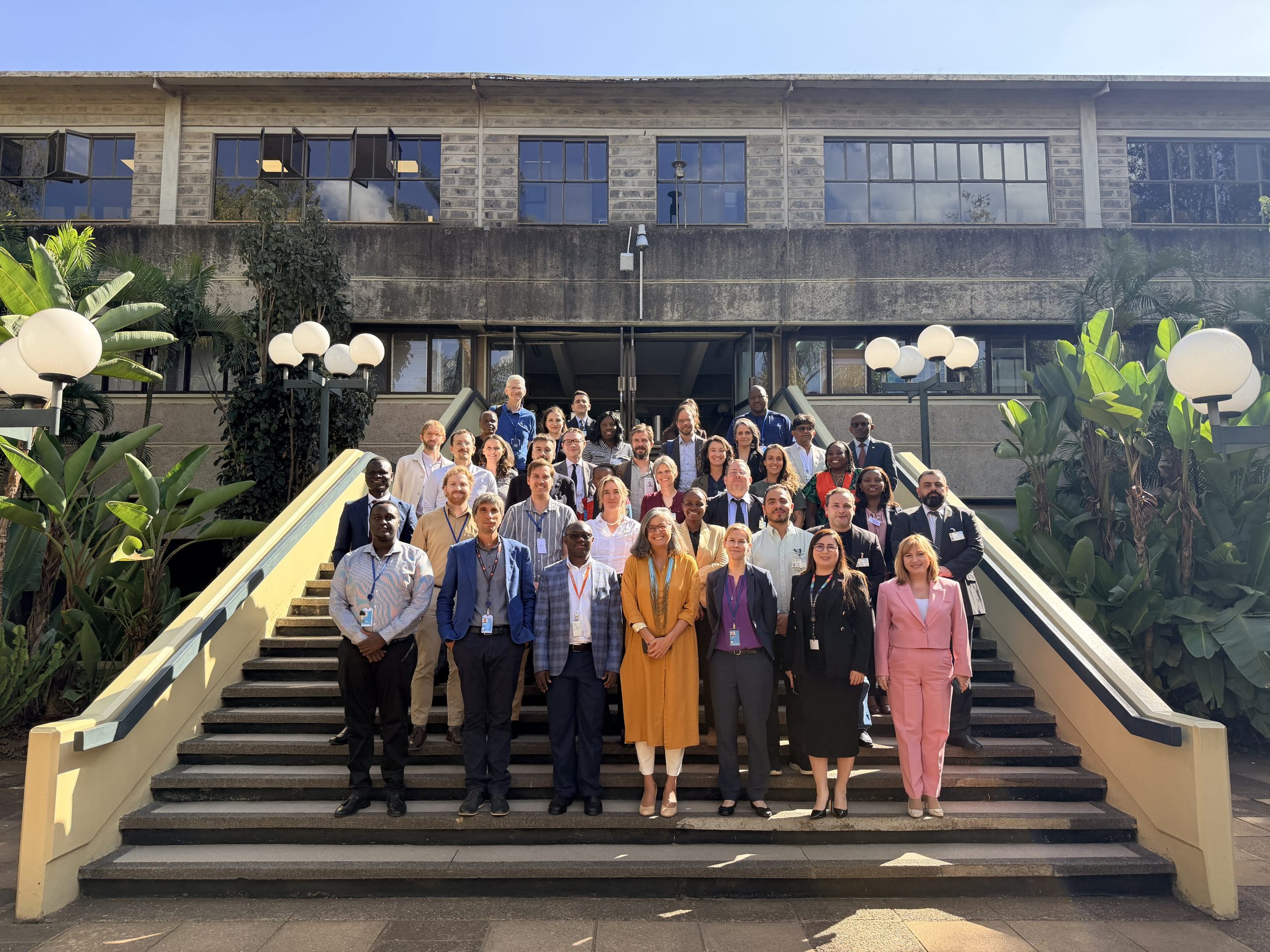
On 20–21 January 2026, Nairobi hosted a high-level expert workshop on Advancing Sustainable Development Goal 11 (SDG 11), organized by UN DESA and UN-Habitat as part of preparations for the 2026 High-Level Political Forum (HLPF). The meeting brought together experts from governments, international organizations, academia, and civil society to assess progress, identify gaps, and propose transformative solutions for making cities and human settlements inclusive, safe, resilient, and sustainable.
The Center for Research and Policy Making (CRPM) was represented by Dr. Marija Risteska, who contributed to the discussions by presenting CRPM’s work on gender-responsive disaster risk reduction (DRR) and the Gender Budget Watchdog’s Network (GBWN) approach to sustainable transport and climate financing.
Gender, Transport, and Climate Finance as Accelerators of SDG 11
In her intervention, Dr. Risteska highlighted the work of the Gender Budget Watchdog’s Network (GBWN) on advancing gender-responsive transport systems and improving women’s access to climate finance for sustainable mobility. She emphasized that transport is not gender-neutral and that mobility systems shape women’s access to employment, education, health services, and public participation.
Drawing on GBWN’s analytical and advocacy work, the presentation underscored the importance of:
- integrating gender considerations into urban and transport planning;
- aligning transport investments with climate mitigation and adaptation goals;
- ensuring women’s meaningful participation in decision-making related to climate finance and infrastructure.
These perspectives directly contribute to SDG 11.2, which calls for safe, affordable, accessible, and sustainable transport systems for all, with special attention to women and other groups in vulnerable situations.
CRPM’s Gender Mainstreaming in Disaster Risk Reduction
Dr. Risteska also presented CRPM’s extensive experience in gender mainstreaming in disaster risk reduction, with a focus on work conducted in Macedonia, particularly in flood-prone regions. The presentation showcased CRPM’s methodological guidance for integrating gender perspectives into DRR planning, policies, and budgets, developed in cooperation with local governments and international partners.
Key elements of CRPM’s approach include:
- gender analysis of disaster risks and vulnerabilities;
- collection and use of sex- and age-disaggregated data;
- strengthening women’s participation in local DRR decision-making structures;
- integrating gender-responsive measures into flood risk management plans, protection and rescue plans, and crisis response frameworks.
This work responds directly to SDG 11.5 and 11.b, as well as to the Sendai Framework for Disaster Risk Reduction, by addressing the disproportionate impact of disasters on women and other vulnerable groups and by promoting inclusive, risk-informed governance.
Linking Local Practice to Global Policy
A key message from CRPM’s contribution was the need to better connect local-level practice with global SDG monitoring and policy processes. The Nairobi workshop emphasized that progress on SDG 11 remains uneven and insufficient, particularly for marginalized urban populations, and that achieving the goal by 2030 requires integrated, gender-responsive, and evidence-based approaches.
CRPM’s experience demonstrates how gender equality can act as a multiplier for urban resilience, climate action, and social inclusion—moving beyond standalone gender interventions toward systemic change in urban governance.
Looking Ahead to HLPF 2026
The insights shared during the workshop will inform the thematic review of SDG 11 at the 2026 High-Level Political Forum, including future collaborations, policy recommendations, and good practice examples. CRPM’s engagement reaffirmed the essential role of civil society and research organizations in shaping inclusive urban policies and ensuring that gender equality remains central to sustainable development.
As cities face intensifying climate risks, social inequalities, and infrastructure pressures, CRPM will continue to advocate for gender-responsive urban transformation, linking transport, climate finance, and disaster risk reduction to deliver tangible results for women and communities.
